Showing posts with label spacious. Show all posts

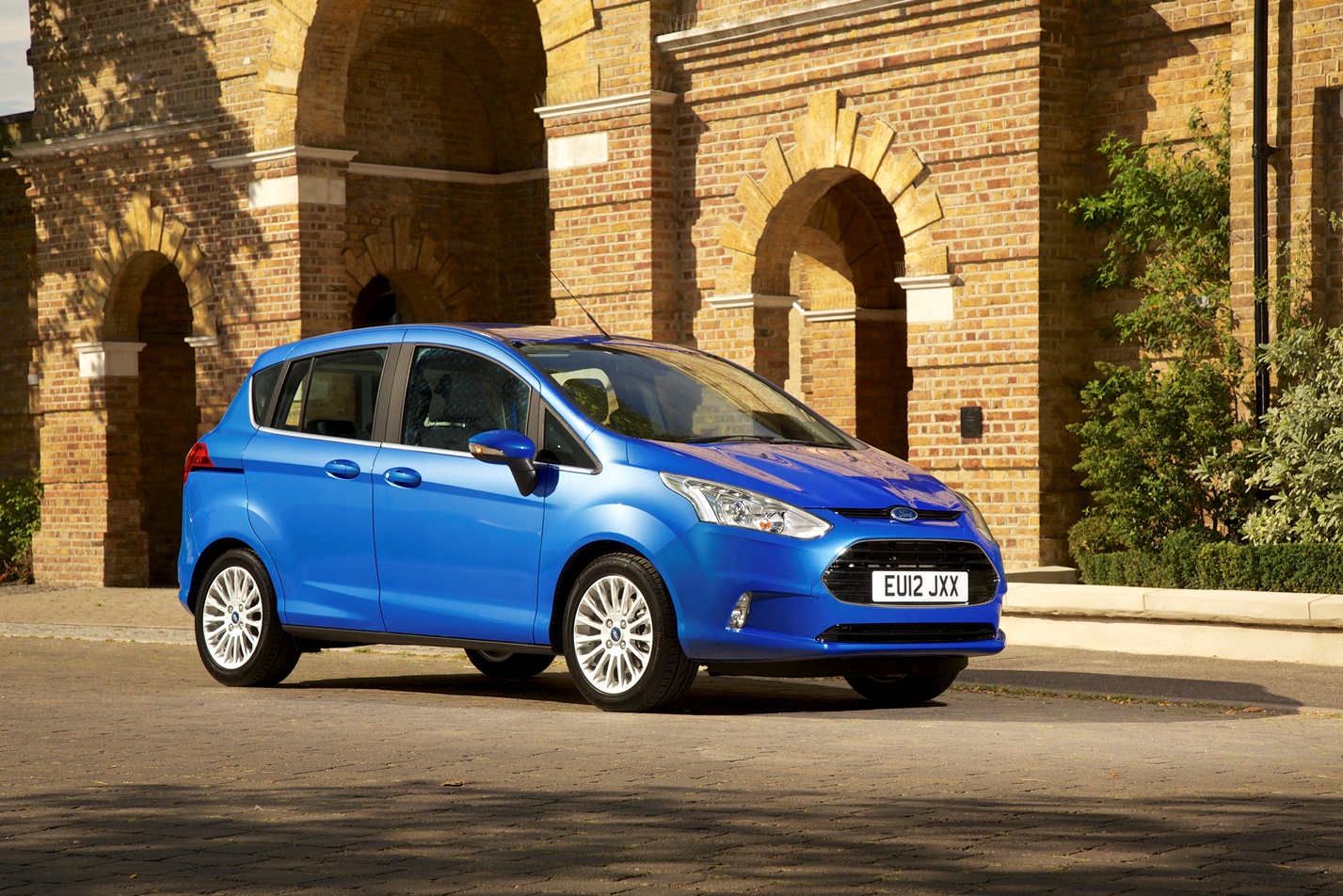
Road Test: Ford B-Max 1.0 EcoBoost Titanium


Price as tested: €23,170

+ Doors, comfort, engine, chassis, quality
– 1.0 not economical enough, needs more space in the back
= Better than the diesel version but still flawed

You know what, I may have given the B-Max a bit of a harsh time the first go-round. When I first drove Ford’s clever new compact people carrier, I was disappointed by its lacklustre new 1.5 diesel engine and equally disappointed by a ride quality that was just too firm and handling that felt too top heavy.

And while my criticisms of the diesel and the ride remain, having spent a bit more time with this, the 1.0-litre turbo petrol EcoBoost model, I have to say that the B-Max is coming rather more into focus for me.

Let’s start with that engine, which has been showered with praise and awards since it was launched last year. Virtually small enough to fit into carry-on luggage, the little three-cylinder EcoBoost engine is a paragon of smoothness, refinement and, surprisingly, grunt. A 100bhp power output is plenty enough in a car the size of the B-Max, and while 170Nm of torque isn’t much compared to the best diesels, it’s enough to make sure that the B never feels sluggish or caught in the wrong gear. And then there’s the character of it. Quiet and hushed at a motorway cruise, it revs happily and emits a distinctly Porsche-esque growl as you approach maximum rpm. It is quite brilliant.

Or at least it would be if not for a significant achilles heel. Fuel consumption. There’s no way of getting around it, over a mixture of motorway, town and main road mileage, I averaged just 8.2-litres per 100km. That’s 34mpg. That’s simply not good enough for a compact family car these days, especially one so explicitly looking to tempt diesel buyers back to petrol. I know, I know, long motorway hauls aren’t a petrol B-Max’s natural metier, but all cars these days have to be all things to all people and the sad fact is that I’ve gotten similar average consumption out of a 218bhp Mini Cooper S Works GP...

That aside, the B-Max really is a lovely little car to drive. Perhaps it’s the reduced weight of the petrol engine versus the diesel that last I tried, but the handling felt distinctly better. You still feel that the weight of the body is set a touch too high (those complicated latches for the sliding side doors the culprit perhaps?) but it’s still got that lovely, fluid feel we’ve come to associate with Ford’s right back to the 1993 Mondeo. The ride quality is still a touch too firm I’d say, and that gives ground to the much more supple Citroen C3 Picasso, but if you’re a keen driver, who needs a small, practical family car, then this is the one for you.

That said, if you really need a small, practical family car, I’m not 100% convinced by the B-Max’s credentials in the practicality department. Those sliding side doors are brilliant, and they make the loading and unloading of small people and their car seats very easy, especially in the close confines of a multi-storey car park. The fact that there’s no b-pillar doesn’t really have a massive effect in terms of loading and unloading, and in fact for some people it may make getting in and out a little more tricky (nothing to grab hold of bar the front seatback) but on the whole, it’s an entertaining gimmick and would certainly make a trip to IKEA that much easier.

But there’s not quite enough space in the back seats, specifically in the legroom department. I’m a hair over six feet tall, and I can fit in the back reasonably comfortably. But my two-and-a-bit year old son, who’s a hair over three feet tall, struggled a bit with space. Why? Because there’s a full six or seven inches between the back of the base that his car safety seat sits on and the actual base of the seat where he sits. That means he’s lifted up and forward by the shape of the seat, which means either he’s cramped for legroom, or I am because I have to pull my seat forward to give him space. It’s not a problem unique to the B-Max, but given the amount of thought Ford has clearly put into the doors, I was hoping for better.

The rest of the interior is just about perfect though, with a big, deep, square boot, comfy seats and a lovely-looking, high quality dash. My Titanium-spec press car also came with Ford’s new Sync system that connects wirelessly to your smartphone both as a phone and as a music player. As a phone it worked swiftly and flawlessly, but I found that the Bluetooth audio streaming tended to make tracks skip annoyingly, but they did play smoothly when connected by a USB cable. Still, the sound quality of the optional Sony stereo was little short of awesome. A highly recommended option.

At €23,170 for the test car, the B-Max makes an interesting alternative to a conventional hatchback, and its extra height and trick doors means that it’s potentially more practical than a similarly priced Focus. But that (otherwise) brilliant little 1.0-litre engine needs to give better economy in real world driving, and a touch more space in the back would make the B-Max nigh-on unbeatable.


Facts & Figures
Ford B-Max 1.0-litre EcoBoost Titanium
Price as tested: €23,170
Range price: €19,821 to €27,600
Capacity: 999cc


Power: 100bhp

Torque: 169Nm 

Top speed: 175kmh 

0-100kmh: 13.2sec

Economy: 4.9l-100km (60mpg)

CO2 emissions: 112g/km

VRT Band: A4. €200 road tax

Euro NCAP rating: 5-star; 92% adult, 84% child, 67% pedestrian, 71% safety assist – joint safest car in small MPV category.




News: Citroen C3 Picasso gets updated


One of our favourite cars, the Citroen CS Picasso (check out our recent long term test HERE) is getting an update and freshen up for 2013, but sad to say, there's a small note of disappointment in the news.

On the outside, the C3 Picasso is, frankly, looking better than ever, with a revised front bumper and the latest Citroën chevrons; together with the addition of LED daytime running lights for a fresh new look as standard on VTR+ models. Two striking new body colours are also introduced; Ink Blue and Pearlescent White.

Inside, little has changed overall but there is a new trim called Mistral ‘Mixou’ cloth, which is specified as standard on the VTR+ model. An electro-chrome rear view mirror is now included in C3 Picasso’s Automatic Pack option at no extra charge and there are new 16” ‘Blade’ alloy wheels as standard on the VTR+ version. 

As before, the the Special Edition C3 Picasso CODE comes with an array of additional equipment; including striking black or white ‘Clover’ 17" alloy wheels, panoramic sunroof, chrome door mirrors and roof bars; for a great value step-up cost of just €500. That's the model we had on our long term test and we'd unreservedly recommend it.

But there is a faint disappointment in the engine department. In the UK, the Picasso now comes with an updated 115bhp 1.6 diesel engine, while we just get the old 90bhp version – hardly the quickest thing around. Still, the 115bhp version would bump up both the price and the Co2 ratings, so perhaps we should be thankful for small mercies.

Prices start from €20,995 for the VTR+ model and €21,495 for the Code.


Road Test: Skoda Rapid 1.6 TDI Elegance


Price as tested: €24,265

+ Simplicity, quality, reliability, space, practicality, price, styling, comfort
– A few rough edges showing through to go with that price tag, indifferent handling
= As practical and sensible as they come but we'd save up the extra for the new Octavia

If I were to say that the new Skoda Rapid is both and at once a return to classic form for Skoda and something of an unfortunate step backwards, would that be too confusing? Possibly, so let me explain.

Pre-1998, Skoda was to most people a joke and not an especially funny one. Decades of decrepitude under communist rule meant that Skoda had been starved of development funding and any reason to produce competitive, interesting cars. That changed, dramatically, with the launch of the original Octavia, funded and developed by Skoda's new owner, Volkswagen. At once, the yoke of communism was thrown off, and Skoda marched happily forwards into a new capitalist reality. Successive models, from the Fabia to the second generation Octavia to the Superb to the utterly brilliant Yeti underpinned that reality with success, both critical and financial. And with sophistication. In fact, sit into a Yeti or a Superb today and you'd be hard-pressed to tell the difference between affordable Skoda and aspirational Audi. They are that good.

But there is now an increasing trend in the motor industry towards making cheaper cars, something that the car buying public is lapping up, as the success of Dacia shows. Make something simple and affordable, and you will capture the wallets, if not the hearts, of many. So it is with the Rapid. Skoda has taken a step back from its shiny, sophisticated recent past and looked further back, to the eighties and beyond, when it made simple, affordable, useful cars. (Never mind the inept comedians of the eighties who castigated Skoda – its cars even then were better by far than their reputation would have you believe.)

The Rapid is a family-sized hatchback that occupies an unusual middle ground between the likes of the Polo and Fiesta on one side and the Golf and Focus on the other. It's narrower by far than a Focus, but also much longer, the upside of which is a cabin that, while not very broad, has lots of leg and head-room for tall passengers in both front and rear, and a massive 550-litre boot that makes the trunks of even cars like a Mondeo or Passat look underfed.

So, it pushes all the practical buttons and it's not short of sophistication either. The engine in our test car was the cutting-edge VW Group 1.6 TDI diesel, and with 105bhp and 250Nm of torque, it's both swift and economical. Skoda claims 4.4-litres per 100km fuel consumption (64mpg) and if we didn't quite manage that, we easily broke the 50mpg barrier. 114g/km Co2 emissions is a touch high though, especially when you consider that a VW Golf with essentially the same engine gets closer to 100g/km, and that means your annual tax bill will be €200. It's here that you'll find the first chink in the Rapid's armour though. The engine (or possibly its installation) is fine, but nothing more. Acceleration feels noticeably slow-witted unless you push the oddly-weighted throttle pedal all the way to its stop, and refinement isn't terrific until you settle down at a chosen cruising speed.

Inside, Skoda has made great efforts to make the cabin look and feel as sophisticated as its bigger brothers, while still costing less. It's a neat trick, and Skoda almost pulls it off. The dials are clear and look like expensive watch faces. The steering wheel feels pleasant to hold and the driving position is both comfortable and well sited. But you'll notice that there's no switches in the front to control the rear windows, the grab handles in the roof clang back into position without a nice, soft motion and the plastics on the doors and dash-top, while still of good quality, don't have that nice touchy-softy-squishy feeling.

Because of all that, the Rapid feels a distinct degree less sophisticated than its Skoda cousins. Now, that's fine in the sense that it's also much cheaper. Prices start at just €16,515 (for the 1.2 MPI petrol; an engine best avoided if you want to (a) accelerate or (b) save fuel) and the pick of the range, the 1.2 TSI turbo petrol in Ambition spec, is just €19,550, with almost identical Co2 emissions to the diesel. All well and good, and those prices include standard electronic stability control – a significant benefit.

But it just doesn't feel as good to drive as it either should or could have. The rear suspension has been done on the cheap, relatively speaking, and uses simple torsion bars instead of the more modern multi-link setup as found on most Octavias. That means the boot is massive, but the Rapid does tend to clatter over bumps, and it never feels very well sorted at the front, either. Cornering is a somewhat lazy, imprecise process with vague steering and a sense of detachment. It's a good motorway cruiser, mind, with well suppressed engine noise and only a small amount of road and tyre noise.

I guess it depends what you want from a car. The Rapid is keenly priced, practical, spacious, ruggedly built, should prove reliable and hits its marks in terms of economy and emissions. It even looks quite nice. But I reckon Skoda buyers, by and large, have moved on recently and are enjoying the sheen of quiet luxury on recent models. So, perhaps it would be best to hold off buying, save up a little more, and get your hands on the impressive new Octavia that arrives in March. The Rapid's backward glance to a simpler, more practical time is appealing in many ways, but we all want to feel a little more sophisticated these days, don't we?


Facts & Figures
Skoda Octavia 1.6 TDI 105bhp Elegance
Price as tested: €24,265
Range price: €16,515 to €24,265
Capacity: 1,598cc


Power: 105bhp


Torque: 250Nm 


Top speed: 190kmh 


0-100kmh: 10.4sec


Economy: 4.4l-100km (64mpg) 


CO2 emissions: 114g/km
 VRT Band: A4. €200 road tax


Euro NCAP rating: 5-star; 94% adult, 80% child, 69% pedestrian, 71% safety assist


News: Skoda to car buyers: Don't buy! At least not yet...


It's not often that you hear a car company exhorting buyers not to go out and put their hands into their wallets, but that's exactly what Skoda is asking Irish car buyers to do. At least, for the moment...


You see, Skoda has this week announced specification and pricing details for their third new model in just six months with the imminent arrival of the new Octavia to Ireland. Unveiled internationally  late last year the new Octavia will be available in Ireland from March with three different specification variants, both manual and automatic transmission options and five engine alternatives the new Octavia offers the Irish motorist considerable choice with prices starting from €18,995.
 

Originally launched in Ireland back in 1998, the Octavia has become a firm favourite with Irish motorists with more than 40,600 sold to the end of 2012. Now as Skoda enters its 20thAnniversary in Ireland, the third generation of the Octavia will see Skoda challenge not only direct competitors in the medium family segment but, thanks to its increase in size, challenge vehicles in the Mondeo-Passat-Avensis class.
 
The new Octavia has grown significantly in length and width, the new model is 90mm longer and 45mm wider than the outgoing Octavia. The wheelbase has grown by 108mm enabling the Octavia break the mould for spaciousness in its model segment with interior length (1,782mm), more knee room (73mm) and more headroom at the back (980mm) as well as best in class boot volume of 590 litres.


The new Octavia is powered by the latest low emission TSI petrol engines as well as common rail diesel engines with Stop Start technology for excellent fuel economy.

Speaking on the price reveal for the new Octavia in Ireland, Raymond Leddy Head of Marketing, Skoda Irelandsaid: “We have increased specification levels for all versions of the new Octavia.  Additional airbags, Electronic Stability Control for increased safety and Stop Start Technology for reduced emissions and improved fuel economy are now standard features across the range.  Stylish alloy wheels are now offered on all models with the exception of the entry Active model. In dimension terms the new Octavia is wider and has grown in length by 9cm allowing for increased cabin space and luggage capacity. Despite this growth the new Octavia has in fact shed up to 100kg in weight compared to its predecessor. Less weight equates to better fuel economy and the new Octavia in its 1.6 TDI version consumes only 3.8 litres for every 100km travelled.


Leddy continued, “The new Octavia will be offered with attractive finance terms from €239 per month inclusive of servicing form Skoda Finance. The new Octavia goes on sale at Skoda Authorised retailers from 16thMarch.  We would encourage anyone thinking of purchasing a new car for 2013 to consider the next generation Octavia before making that all important purchase.”


Road Test: Fiat Punto 1.3 MultiJet


Price as tested: €15,495

+ Styling, improved quality, excellent engine, value, comfort, space
– Still too much cheap cabin plastic, not much else
= Unfairly ignored compact hatch, deserves more attention

I bet you've forgotten about the Fiat Punto. It wouldn't be hard to be fair. Since its 2000 heyday when it was one of the best selling cars in Ireland's all-time bumper year for car sales, the Punto has steadily slid down the car sales cliff, in spite of a gorgeous 2005 re-issue with Maserati-like styling by Giugiaro. In a class populated by the likes of the Ford Fiesta, Volkswagen Polo, Peugeot 208, Kia Rio and so many talented others, it's just too easy for the Punto's light to stay well and truly beneath a handy bushel.

And I'll also bet you have some pretty lazy pre-conceptions about Fiat cars in general. If you're of a certain age, rust and electrical maladies will still be top of your list when it comes to Fiat, in spite of two decades where Italian build quality has done nothing but improve.

Of course, Fiat itself has seemed to occasionally ignore the Punto. While the glamorous 500 and the practical Panda have since come along to take centre stage, the current Punto is merely a facelifted version of the car that was launched in 2005.

So, I wasn't expecting all that much when I grabbed the keys to the test car. Yet another facelift of the Punto has come along, reversing some of the rather poor styling decisions made when it became the Punto Evo in 2009, but I too had fallen prey to assuming I knew the Punto's place in the universe.

I'm therefore pleased to report that I was wrong. The updates to the latest generation have gone a long way to strengthening the Punto's hand and it's actually a much sharper competitor to the likes of the Fiesta and Polo than you would have thought. Certainly, it looks arguably better than either, and the cabin now benefits from much higher quality surfaces than before, albeit you don't have to look too hard to find hard, scratchy plastics.

There's good space in there too, and the seats are comfy while out back, the boot is big and well shaped.

The actual production version of the updated 1.3-litre MultiJet Diesel engine will have 85bhp in the Puntos you'll find in dealerships, but our test car actually had the old 75bhp version fitted. No matter, even with the rise of the clever little two-cylinder TwinAir petrol, the diesel is the Punto to have, even if it is a pricey option. Quite apart from exceptionally good economy and emissions figures (90g/km of Co2 and potentially as good as 80mpg if you're in-cred-ibly delicate with the throttle) there is the matter that its 200Nm of torque means it is a relaxed and capable long-haul car, something you could never have said of the old 1.2-litre petrol. Mind you, an extra cog in the slightly slack-shifting five-speed gearbox would help in this regard.

Also a touch slack is the steering, which feels entirely artificial and fake, which is a shame as through the clouds of over-assistance you can feel a really quite talented chassis at work. It's not quite as sharp or rewarding as a Fiesta, but it's more fun by far than most others in the class to throw around, and in spite of ever-increasing girth the Punto still feels properly small and enjoyably agile. It also rides better than it did in 2005 when I first drove it. It still jiggles a little over small, sharp surfaces, but bigger bumps are smoothed over with a deft Italianate roll of the shoulders.

Add to that a reasonably affordable list price of €15,495 which includes pretty decent equipment as standard, and the Punto's package is starting to come together really rather well. And then there's the intangible loveliness that comes with merely driving an Italian car. A little touch of flair, a merest hint of style all makes the experience that bit more enjoyable. It's not something that will appeal to all, perhaps indeed only to a select few, but it's the difference between shopping on Grafton Street or in the Grand Piazza in Milan. You just, or at least I just, feel as if you're cutting a bit more of a rakish figure climbing out of your Punto at the kerb side.

No, the Punto's not perfect, and yes, thanks to that broad public perception you will pay a harsh price come resale time, but I left it back feeling quite surprisingly sad to see it go. Character is a rare thing in an increasingly homogenised car market, and the Punto has that in buckets. To find that it also has a remarkable amount of substance to back that up was simply a welcome surprise.


Fiat Punto 1.3 JTD 85bhp
Price as tested: €15,495
Price range: €13,495 to €15,495
Capacity: 1,248cc
Power: 85bhp
Torque: 200Nm
Top speed: 170kmh
0-100kmh: 12.7sec
Economy: 3.5l-100km (80mpg)
CO2 emissions: 90g/km
Road Tax Band: A2. €180
Euro NCAP rating: 5-star adult, 4-star child, 3-star pedestrian


Road Test: Toyota Auris 1.4 D4D Luna


Price as tested: €23,995

+ Slick new styling, comfort, ride, refinement, quality, space, economy
– Steering still too detached, engine a bit underpowered
= We were hoping for GT86-like driver appeal, we actually got the quietest, comfiest car in the class


Toyota generally gets a lot of flack for being dull and middle of the road. Indeed, influential US website Jalopnik.com has made the words Toyota and Beige almost indivisible. But it’s an unfair rep, especially considering cars like the original Celica (and its subsequent versions), the Supra, the MR2, the brilliant new GT86, all those World Rally Championship victories and the amazing Le Mans racing cars. Beige Toyota ain’t, no matter what some snarky bloggers might say.

In fairness though, some of Toyota’s mainstream models have been a bit too quiet for their own good down through the years, and the last generation Auris was a case in point. Too subtle on the outside, with a cabin that even Toyota now admits wasn’t up to snuff means that while it always sold well, the Auris fell well behind the likes of the Ford Focus and VW Golf in critical terms.

But what’s this? A new Auris with a sharp-looking body (check out that beaky nose with the dramatic bottom grille and big cut-outs for the foglights)? Has Toyota finally injected some flair and drama into its mid-size hatch?

Well, you won’t find much drama in the engine room. The 90bhp D4D Diesel engine is about 20bhp down on most of its rivals, and you can tell that as soon as you put your foot down. Performance never quite descends into being sluggish, but neither does it have the effortless punch of, say, Ford's 1.6 TDCI. Toyota, of course, has a grunty, efficient 2.0-litre diesel already in the Avensis. What hope of it being fitted to an Auris? In the meantime, the 1.4 D4D is at least a sweet-natured unit, and very economical. Toyota claims 3.8-litres per 100km on the combined fuel cycle (around 74mpg) and that seems entirely believable, as we were gettting close to 4.0-litres per 100km when driving mostly around town. 99g/km Co2 emissions (as long as you go for the basic 15" wheels) should keep you in the lowest two of the proposed four-way-split Band A tax ratings.

It settles quickly from idle into a distant thrummy noise, and fitting in with the Auris' generally refined nature. Cabin noise levels are very low, whether you're thinking about engine, wind or road noise and the ride quality, especially around town, is truly exceptional. It all adds up to make the Auris one of the most refined, comfortable cars in its class.

It is not, however, much of a drivers' car. Off the back of the brilliant little GT86 coupe, we had hoped that some of that car's DNA might seep through into the Auris and allow it to have a tilt at the sort of pin-sharp driver appeal as displayed by the Focus and Golf. Alas, no. The Auris' steering is light, verging on over-light (think of an early seventies Jaguar XJ6 steering and you're getting there) and it leaves you feeling distanced and separated from the car. That's a shame, as beneath the mush, the chassis feels well-balanced and controlled. There is, possibly, an engaging driving tool in there somewhere, but its light is being kept defiantly sub-bushel.

Such considerations are compensated for by the fact that the cabin is spacious, bright and airy, the boot a decent size and shape (although the boot floor is made of the most unpleasantly cheap flooring material we've yet seen) and of course, the fact that the famed Toyota quality seems to be present and correct.

It is also rather handsome. Possibly less so at the back, where it descends into generic hatchback-ness, but up front, the beaky new nose with its scowling lights, LEDs and aggressive trapezoidal grille looks rather striking, certainly by Toyota standards. It seems to owe no debt to any other Toyota (save perhaps a passing resemblance to the Avensis) and if so, hopefully it is the vanguard of a new family of sharper-looking Toyotas.

Prices start at €18,995 for the 1.33 99bhp petrol in Terra trim (which notably does without such items as air conditioning or Bluetooth phone). Our bells-and-whistles 1.4 D4D Luna comes in at a very competitive €23,995 and includes climate control, Bluetooth, reversing camera, touch-screen stereo and much more.

So while the Auris might be lacking in the final sheen of GT96-like driver appeal we were hoping for, its comfort, spaciousness and its likely reliability score very highly with us. The new found style is welcome, the rest are welcome returns. No drama then, but equally, no crisis.

Toyota Auris 1.4 D4D 90 Luna
Price as tested: €23,995
Price range: €18,995 to €27,990
Capacity: 1,364cc
Power: 90bhp
Torque: 205Nm
Top speed: 170kmh
0-100kmh: 12.6sec
Economy: 3.8l-100km (74mpg)
CO2 emissions: 99g/km*
Road Tax Band: A. €160
Euro NCAP rating: Not yet tested


*When fitted with 15” steel wheels


Road Test: Skoda Superb 2.0 TDI 170 L&K


Price as tested: €36,645

+ Comfort, practicality, space, solidity, quality, refinement
– A touch pricey for a Skoda?
= Lovely car, but lesser Superbs are just as good

It’s doubtful that Vaclav Laurin and Vaclav Klement established their eponymous motorcycle and bicycle company in 1895, that either of them ever imagined having their names on a car that competes with contemporary BMWs. Very doubtful in fact, because in 1895, BMW didn’t exist. Nor did The Czech Republic, modern federated Germany or much else that we today consider so familiar. What did exist was the Skoda Engineering Works, founded in 1859 by the aristocratic Count Wallenstein-Vartenberk. Skoda would buy out Laurin and Klement in 1925 and the two were joined at the hip until the creation in 1945 of Czechoslovakia and the nationalisation under Communism.

A little bit of history there, and apologies if it dragged, but it’s a necessary bit of background to understand why modern-day Skoda is launching a pricey limited edition (just 40 units coming to Ireland) of its Superb saloon, complete with calligraphic Laurin & Klement script on the wings.

€36k may seem a lot to be shelling out for a Skoda, any Skoda, but the fact is that these days, the brand seems able to bear such an expensive car with ease. We’ve all waffled on so much about how far Skoda has come since its eighties nadir, but the simple fact is that the cars now turned out by the Mladá Boleslav factory in what is now the Czech Republic are among the very best that you can buy, and stand easy comparison with rivals even from premium brands such as BMW and Mercedes.

Certainly when you crank open the Superb’s hefty door and lower yourself onto a buttery-soft dark brown leather seat, you’d be hard pressed to call the Superb L&K anything short of properly luxurious. The surfaces of the cabin are all finely graded, the seats terrifically comfortable and, as has been the Superb’s calling card since its introduction, the rear seat space practically presidential.

Out back, accessed by the oddball TwinDoor boot system that allows you to decide whether you want your Superb to act as a saloon or a hatchback, lies a massive 565-litre luggage area (which even with two demanding children aboard, we were unable to overwhelm with luggage). It’s these practicalities of space and comfort that give the Superb such an instant ‘want-one’ factor – the fact that there are few, if any, tasks you could give it which it would not be able to easily deal with.

Standard equipment includes bi-xenon headlights, 18” alloy wheels, Bluetooth phone and media player connection, full leather trim, climate control (for both front and rear passengers), heated seats (ditto), automatic wipers, cruise control, sat-nav. The list goes on and on, but it should be noted that apart from the deep brown colour of the leather seats, there is nothing here that you couldn’t already spec an existing Superb model up with.

As with all other Superbs, the L&K steers sweetly and faithfully. It never exhibits the handling alacrity that you’d get in a Ford Mondeo, but it’s never less than utterly competent in the corners and is a very relaxing, easy-going car to drive. Skoda has improved the Superb’s ride quality over the years, but it remains a touch too jiggly at times, which is a shame given the car’s overall levels of comfort and refinement.

The 170bhp 2.0 TDI diesel engine, familiar from many other Volkswagen Group applications, remains a paragon of its kind – quiet, efficient and with decently brisk performance. We averaged 6.5-litres per 100km, better than 40mpg, but bear in mind that your overall touring range will be limited by the Superb’s surprisingly small fuel tank. An on-paper 8.8secs 0-100kmh dash time makes the Superb sound quite quick, but the reality is that its performance feels more relaxed than that.

It’s a very satisfying car, the Superb L&K. One of those cars that feels instantly ‘right’ the moment you sit in, and that’s a feeling that doesn’t fade with familiarity. As a spacious, high-quality family car, it’s all but impossible to beat, and loaded up with the L&K’s extra equipment and luxury appointments, it really can take on the likes of the BWM 3 Series and Mercedes-Benz C-Class. It’s not as agile to drive as either, but destroys the Germans when it comes to interior space and practicality.

For all that, you could say the same of any Superb, and if you’re willing to forego the soft leather and sat-nav, there’s better value to be had further down the price list. Not that dear old Vaclav and Vaclav would have cared though; most of their original L&K cars were luxury models anyway...


Skoda Superb 2.0 TDI 170 Laurin & Klement
Price as tested: €36,645
Price range: €24,695 to €47,895
Capacity: 1,968
Power: 170bhp
Torque: 350Nm
Top speed: 222kmh
0-100kmh: 8.8sec
Economy: 5.7l-100km (52.3mpg)
CO2 emissions: 149g/km
Road Tax Band: C. €330
Euro NCAP rating: 5-star; 90% adult, 81% child, 50% pedestrian, 71% safety assist


News: New Renault Clio gets Irish launch


Renault has launched its hugely significant fourth-generation Clio on the Irish market, with prices starting from €14,990 for the most basic 1.2-litre petrol model.
Far from being a stripped-out base version though, and in keeping with Renault’s recent reputation for providing well-equipped models versus the competition, it benefits from a 4x20W radio with Bluetooth and USB connection, Bass Reflex system (enhanced speaker sound quality), driver/passenger/ front side airbags, 60/40 split-folding rear seat, daytime running lights, ESC, Hill Start Assist, height and reach adjustable steering wheel, electric front windows and door mirrors, keyless entry and ignition, plus cruise control and speed limiter.
If you want a Band A Clio though (the 1.2 is a Band B car) then you'll have to go for either the familiar, but updated, 1.5 dCi diesel (only 83g/km, without a hybrid battery in sight) or the all-new, high tech 900cc turbo petrol, which boasts 105g/km of Co2 and 60-odd-mpg.

Depending on spec, the new Clio is the first car to get Renault's new R-Link system, which uses a 7-inch touchscreen to control the infotainment systems, provide internet access on the go (not for the driver, natch) and has an integrated TomTom navigation system and a high-end Arkamys sound system.

The style of the new Clio is certainly eye-catching, and it's the first production Renault to get the new styling language previewed by the Dezir concept car. “Simple, sensuous and warm: these are the three words that sum up the design of Clio – just like that of DeZir. This is no accident, for both these vehicles were designed by the same team. As a five-door hatchback with the coupé profile of a three-door, New Clio is all about passion. And thanks to the skills of our engineering teams, it has remained faithful to our original vision” said Antony Villain, Director, Exterior Design Studio.

Julien Lelorrain, marketing director of Renault Ireland told us that “New Clio embodies the renewal of Renault Design as part of an approach based on sensuality and warmth.  New Clio allies a head turning design, come with economical engines, highest level of safety with 5 stars Euro Ncap and yet at very affordable price starting from €14990 or €149 per month with Renault Finance for a rather well equipped Expression Trim level. New Clio is the perfect car for those looking for a beautiful yet affordable car."


Road Test: Hyundai Santa Fe 2.2 CRDI 2WD Comfort


Price as tested: €36,995
+  Style, comfort, dynamics, engine, quality, price, equipment
–  Some cheap cabin bits, 3rd row seats very small
=  Could genuinely take the game to the premium brands


The first thing that strikes you when you climb aboard the new Hyundai Santa Fe is that you’d be very happy to do a very long journey in one. The seats are comfy, the quality of the cabin excellent and the steering wheel, in spite of some oddly slippery leather wrapping (was someone a bit too enthusiastic with the old Son-Of-A-Gun?) feels good in your hand. As a driving environment, it’s a hard one to beat.

That’s a confirmation confirmed when you twist the key and fire up the upgraded 2.2-litre diesel engine. Aside from a brief burst of diesely-clatter on a cold start, it’s a remarkably refined engine, something that becomes even more remarkable when you realise that our test car had just 94km on its odometer. If it’s this good now, it could potentially be even better with a few loosening-up miles on the clock.

Select first and nudge out of the gate and do all those positive first impressions survive a meeting with the road?

Well, we’ll get to that in a minute, but for a moment, let’s consider the Santa Fe’s place in Hyundai’s firmament. I have to confess that I despised the original 2000 Santa Fe. Rugged and reliable it may have been, but it was lumpy to look at, lumpy to drive and had some of the most uncomfortable seats I’ve ever sat on. The 2007 replacement then, was as much relief as revelation, and a precursor to the recent product revolution at Hyundai, arriving as it did just ahead of the first generation of Hyundai’s i-models. Now, the Santa Fe could boast pleasant styling, a useful seven-seat cabin (even if the third row of seats was suitable only for small children) and competent on-road dynamics. And decent seats, thank the lords of motoring.

Since when, Hyundai has been on a major roll, with cars like the i30, i10, ix35, i40 and Veloster coupe proving that it can now make cars that are not only good, but good enough that the company can effectively abandon its old pricing policy. Whereas Hyundais of old would always be priced around €1,000 or so cheaper than the likes of a rival Ford or Toyota, now the prices are comparable, even if Hyundai continues to offer better value for money in terms of equipment and its impressive five-year warranty.

Certainly, you would have to say that the new Santa Fe requires no financial incentive if you were to judge it on looks alone. The photos simply don’t do it justice, as it looks classier, chunkier and more substantial by far in the ‘flesh’ than it does on the screen. There is a genuine sense of style to the Santa Fe now; the slightly upright, plain and simple look of the old one gone  and replaced by a thrusting look, quite American (not surprising considering Hyundai’s stateside success) and verging on the brash, but in a nice way. Love the big, chrome-y grille.

Inside, the seven seat layout is retained (and once again, it’s kids, and small ones at that, only in the third row) and the cabin is spacious and comfortable in the third row. A genuine surprise was to find that our test car was the most basic Comfort specification (albeit with optional leather seats) because quite frankly, it was rather hard to find any equipment lacking. Standard toys include a multifunction steering wheel, electric lumbar support, Bluetooth and USB connections for phones and media players, air conditioning, a built-in music hard-drive, a bevvy of airbags, ESP, a Land-Rover-style hill descent control (even though our car was front-wheel-drive) and more. One pleasant, practical touch; the bottom of the doors now wraps under the sill, meaning that you can get in and out without dragging the backs of your trousers or tights on muddy door bottoms. Nice.

Under the bonnet, the 2.2-litre diesel engine is familiar in size but its performance and economy have both been improved. With 197bhp and 420Nm of torque, it’s certainly sprightly, and while the Santa Fe clocks in with a kerb weight of 1,961kg, it can still spin its front wheels up pretty easily, and there’s never a sense that you don’t have more than enough power to get about. Best of all though is the already-mentioned refinement. It’s genuinely quiet and relaxed in the cabin. It’ll make a great long-haul cruiser. Co2 emissions are pretty impressive too, at 147g/km for the 2WD version (149g/km for the 4wd) and Hyundai claims you’ll burn just 5.6-litres for every 100km traveled. That’s well into 50mpg territory, which sounds like a bit of a stretch to us. On the basis of our (admittedly brief) first test drive, we’d say mid-sixes, around 40-45mpg would be more realistic, and still pretty impressive.

The driving experience is pretty good too. Now, we’ve criticised Hyundai’s three-setting Flex Steer system before. It allows you to toggle between Comfort, Normal and Sport modes for the steering, and theoretically offers you lighter or heftier settings depending on your mood or need. In reality, there’s not much difference between the three modes and you can’t help but feel that the development budget would have been better spent on one setting that did everything well. Aside from that, the Santa Fe is very pleasant to drive, well balanced and rides with a BMW-esque firm pliancy, only being upset by truly viscious, sharp-edged potholes.

In fact, the BMW comparison is apt, as Hyundai is reckoning on tempting premium German SUV buyers with the new Santa Fe, and there’s a range-topping automatic Premium version that costs the guts of €50k. Ambitious, overly so for a Hyundai? Possibly, but you know what? This is a very impressive car, handsome to look at, pleasant to drive, with an excellent engine and terrific build quality. I personally can’t see why someone considering a BMW or Audi wouldn’t, if they put aside badge snobbery for a moment, seriously consider a Santa Fe now. It really is that good.

Hyundai Santa Fe 2.2 CRDI 2WD Comfort
Price as tested: €36,995
Price range: €36,995 to €48,995
Capacity: 2,199cc
Power: 197bhp
Torque: 420Nm
Top speed: 190kmh
0-100kmh: 9.8sec
Economy: 5.6l-100km (50.4mpg)
CO2 emissions: 147g/km
Road Tax Band: C €330
Euro NCAP rating: Not yet tested