Showing posts with label Band A. Show all posts

Road Test: Mercedes-Benz E300 BlueTec Hybrid


Price as tested: €52,200

+ Smooth, efficient, seamless hybrid system, classy, comfy
– Very little really
= Merc's first on-sale hybrid is a cracker, right up with the Lexus GS450h

The problem with hybrids is that they never work. Hmmm. That last statement may need a bit of explaining and context. OK, here goes; the problem with hybrids is not precisely that they don’t work (clearly they do, as they go, stop and steer) but that they never seem to work quite as well as you want them to. Hybrids are very clever, very good for lowering your official emissions figure and therefore your annual motor tax bill and very good for making you feel like you’re doing your bit for the environment. What they tend not to be very good at is returning anything like their claimed fuel consumption figures in real-world driving.

Partly, that’s a weight issue. All those batteries and electric motors add mass and complication to a car and the inertia of that mass has to be overcome every time you accelerate. Partly, it’s a driving style thing. To get the best economy out of a hybrid (or any car for that matter) you just have to drive like a saint, or as if a baby panda has taken up residence under your throttle pedal.

So it was that I came to the Mercedes-Benz E300 BlueTec Hybrid expecting to be disappointed. And yet, it had a surprise for me. It may have a long-winded name but actually, the E300 is one of the more simple hybrids around. It’s not expected to do duty as a pure-electric vehicle for anything other than short bursts, so its weight and complication are kept to a minimum. In fact, the E300 weighs just 110kg more than the standard E250 CDI diesel upon which it is based. That makes it only the third diesel hybrid car to go on sale (following on from the French pair of Peugeot 3008 Hy4 and Citroen DS5 Hy4) and, I’d argue, the most successful yet.

Instead of a massive stack of batteries eating into boot and cabin space and pushing up the kerb weight, the E300 has a smaller 19kW lithium-ion battery that’s actually packaged within the engine bay. That feeds a 27bhp electric motor which is neatly packaged within the existing casing of the seven-speed 7G-Tronic automatic gearbox. The idea behind all this extra gubbins is to give the E300 the power and grunt of a big V6 diesel while retaining the economy and emissions performance of a smaller-capacity four-cylinder engine.

And, on paper, it works rather brilliantly. A standard E250 CDI diesel, with a manual gearbox, returns Co2 emissions of 130g/km, giving you an annual road tax bill of €270. An E300 BlueTec does 109g/km, depending on which size of alloy wheel you spec it with. That means you’ll pay just €190 a year to tax it. Perhaps not the biggest consideration for someone spending north of €50k on a new Mercedes, but nice to know all the same.

Speaking of the price tag, there’s a major benefit there too. A very basic E250 CDI, with an optional automatic gearbox, in Classic trim, costs €51,665. An E300 BlueTec in the same trim, but with a standard automatic gearbox, costs €52,200, which seems like not a major extra expense. But wait, it gets better. A regular E300 CDI V6 diesel, to which a BlueTec Hybrid is more or less comparable in terms of performance, costs €64,160 and costs €390 a year to tax. This whole hybrid thing is looking pretty good.

Of course, this is the point where a hybrid’s on-paper performance tends to fall down and disappoint. But actually, the E300 BlueTec rises the the challenge quite well.

I think the key here is the gearbox. Hybrids tend to have very annoying gearboxes, whether it’s the CVT in a Prius that lets the engine rev and roar annoyingly any time you ask for a bit of acceleration, or the EGS gearbox in the Citroen or Peugeot cars which seems to pause for a long and deep thought between every ratio. The Merc’s conventional wet-clutch automatic transmission is a revelation in this respect. You ask for acceleration; you get some. You back off and cruise, and everything goes quiet again. Gear changes are done without fuss, noise or pause. In hybrid terms, it’s an unusually lovely experience.

It’s a very refined powertrain as well. You’ll most likely start off in electric mode, and considering how small the battery is, you’ll go for a surprising distance before the diesel engine kicks in. When it does, you’ll know all about it as there’s little or no hope of entirely disguising the noise of a DERV engine firing up from a cold start, but once everything warms up, it’s a very smooth, refined unit. What will also surprise you is how often, in motorway and main road cruising, the engine shuts down and the electric motor takes over. Known as sailing, this effect can dramatically cut your long-range driving fuel consumption.

Ah yes, the dreaded question of fuel consumption. Mercedes quotes an average consumption figure of 4.3-litres per 100km, or 65mpg. Will you be surprised if I tell you we didn’t manage to match that? Of course not, but if an average of 6.0-litres per 100km on our brief test drive (47mpg) seems like the traditional hybrid disappointment, then perhaps it shouldn’t be. For a start, from an engine with more power and grunt (590Nm) than the standard E250 CDI, that’s a match for the conventional diesel’s fuel consumption, and on top of which, I reckon you’d easily get the E300 to average around 5.0l/100km without too much effort.

There’s not much point in pronouncing on the handling and ride, as our test car was the outgoing-shape E-Class, and there’s a new, sexier-looking E, with tweaked and improved suspension arriving any time soon. Suffice to say that like almost all E-Class models that have come before, what it loses to rivals like the BMW 5 Series in terms of outright precision, it makes up for in terms of comfort and quietness.

No, the E300 BlueTec isn’t going to save the planet, the wales or the endangered salamander, and nor thankfully does it claim to. It is, instead, a well-engineered, good to drive car with a distinctly well-thought-out hybrid transmission installation that will save you money on fuel and tax, relative to other, similar cars. And it’s one of the first hybrids we’ve ever driven that’s not a disappointment.


Mercedes-Benz E300 BlueTec Hybrid


Price as tested: €52,200

Capacity: 2,143cc

Power: 201bhp + 27bhp electric motor

Torque: 590Nm combined

Top speed: 250kmh

0-100kmh: 7.8sec

Economy: 4.3l-100km (65mpg)

CO2 emissions: 109g/km

Road Tax Band: A3. €190

Euro NCAP rating: 5-star; 86% adult, 77% child, 59% pedestrian, 86% safety assist.


Road Test: Volkswagen Golf 1.4 TSI ACT Highline


Price as tested: €33,642


+ Solidity, comfort, technology, refinement, styling, desirable
– Not as economical as a diesel, not sporty to drive
= Golf cements its position as the best family hatch around


Success, of course, breeds success but it can, without care and attention, also breed complacency. Look at George Lucas. Back in the seventies and eighties he created the original Star Wars movies, which delighted and entertained a whole generation of sci-fi fans. Come 1999, and the return of Star Wars to the big screen with The Phantom Menace, those same fans were frothing with excitement at the arrival of what we all confidently expected to be the cinematic event of the decade. Aaaaannnnd... we were sorely disappointed. Lucas seemed to have spent so much time carefully honing the digital effects (which were, in fairness, brilliant) that he forgot that a great film needs a great script. And characters. And a plot.


So it is we come to the seventh generation of Volkswagen Golf, a car that has transcended the boundaries of its class to become classless. You could just as easily and naturally be seen pulling up in your Golf at Aldi as at the Ritz. It is the epitome of affordable Germanic engineering, a family hatchback with the breeding of a teutonic thoroughbred.


For this Mark VII version, VW has really pushed the boat out in engineering terms. There's an entirely new chassis under there, called MQB in VW-speak, and it will go on to form the basis of almost every car in the whole Volkswagen empire in the future. It's light, sophisticated and makes the Golf fractionally more spacious than before. That really shows up inside, where behind the exceptionally comfortable front seats there's plenty of room for kids in bulky safety seats and lanky teenagers.


From the front seats, the cabin is instantly (and hardly surprisingly) Golf-ish, with beautifully clear instruments, a logical control layout and on our highly-specced press demo car, one of the best sat-nav systems we've ever seen. Not only did it have clear, precise mapping but the screen actually detects when your finger is hovering near it and makes the buttons bigger.


That's not the only example of VW putting some seriously careful thought into lightening the drivers' load. There was also Lane Keeping Assist that actually nudges the car back into lane if you start to drift across, active cruise control that brakes (a little too jumpily sometimes) if a car slows in front of you, active cornering lights, LED daytime lights, automatic parking brake, Bluetooth... The list really does go on, but then at the €33,642 for our test car, it should do. Panic not, for the standard version of the Highline model with 1.4 TSI ACT starts at a more reasonable €26,745 and is still very well equipped.


What's ACT I hear you ask? Active Cylinder Technology, a new gizmo that VW hopes will allow drivers of its petrol turbo cars to achieve diesel-like fuel economy. It works by shutting down two of the engine's four cylinders when cruising on a light throttle, seamlessly firing up all four again when you need more power. It's just about undetectable save for a small logo that pops up in the multi-function display in the dashboard, and the faintest sense that a slight harmonic vibration is coming and going, off in the distance. Very clever stuff. Does it actually work? Well, almost. We managed to average 6.5-litres per 100km fuel consumption over a week with the car (that's 43mpg) which isn't at all bad, but we would have easily cracked into the high fifties, even low sixties in mpg terms with an equivalent diesel Golf. And considering that there's only €200 extra to pay for the equivalent diesel model...


Still, this Golf, as with any Golf, is just brilliant to drive. It feels a touch less sporty and agile than the last-generation model, but the comfort and refinement levels have seriously been amped-up. We honestly think that you'd have to trade up to the likes of a BMW 5 Series to find a car that's as quiet and relaxing on a long journey as this one. The only dynamic complaint comes from the fact that the suspension can occasionally get caught out by the typically bumpy, lumpen tarmac that we endure in this neck of the woods. When that happens, the Golf thumps and shudders in a most unseemly fashion, but the rest of the time all is serene. Perhaps the 17” alloy wheels were at least partly to blame.


So, the new Golf is as Golf-y as it's always been, but more so. The quality levels are higher than pretty much anything else in the class, refinement is off-the-scale good and if it doesn't feel quite as agile and enjoyable to drive as before, then its improved comfort and cabin space present a worthwhile trade-off. Shall we stick with the golfing metaphor and conclude that it's a classy hole-in-one?


Facts & Figures
Volkswagen Golf 1.4 TSI ACT Highline
Price as tested: €33,642
Range price: €19,995 to €31,645
Capacity: 1,395cc
Power: 140bhp
Torque: 250Nm
Top speed: 212kmh
0-100kmh: 8.4sec
Economy: 5.0l-100km (56.5mpg)
CO2 emissions: 112g/km
VRT Band: A4. €200 road tax
Euro NCAP rating: 5-star; 94% adult, 89% child, 65% pedestrian, 71% safety assist 


Road Test: Opel Mokka 1.7 CDTI SE


Price as tested: €26,495

+ Styling, handling, quality
– Noisy & outdated engine, tight rear seats and boot
= Firmly underscores Opel's premium ambitions

Opel really needs a hit right now. The company has lost no less than €17-billion in the past decade and a half and while its paymasters at General Motors in Detroit have stuck with Opel through thick and (very) thin, patience is running low. So, with minimal surprise, Opel is having a crack at the fastest-growing segment in European motoring. At a time when the market for cars in Europe as a whole is either stalling or falling, SUVs, especially of the small and efficient variety, are charging ahead, taking buyers out of conventional hatchbacks and saloons. Score a hit here, and it will lift Opel as a whole.

No pressure then, but the Mokka gets of to a good start by looking really, really good. With the sporty bodykit fitted to our SE-spec test car, you could even accuse it of looking over-styled, but it succeeds where its key rival, the Nissan Juke, fails; it’s looks distinctive and exciting without being actively ugly.

Inside too, the styling is a success. Now, the brown, brown and beige colour scheme of our test car was, it must be admitted, a tad eye-watering and most conservative Irish customers will stick to plain old black, thanks very much. But if Opel is serious about its ambitions to break into the premium car market, then the Mokka’s cabin at least makes that ambition start to look realistic. Although it basically pinches existing parts and styling from the likes of the Astra and Insignia, it’s an especially successful casserole of parts, and the levels of quality seem to be very high. OK, so the fact that our car was an SE model, which came with leather seats and steering wheel (both of which were heated) and a bevvy of options such as Sat Nav, Bluetooth and more doubtless lifted the ambience, but the basic structure, design and quality are what really shone through.

It’s a shame then that as soon as you turn the key, some of that premium sheen is dispelled. Opel’s 1.7-litre CDTI diesel engine is both efficient (in terms of its economy and Co2 emissions) and powerful (130bhp and 300Nm of torque make the Mokka feel pretty peppy) but the noise and vibration are distinctly old-school. The engine’s basic design dates back to an early-nineties Isuzu unit and it shows, badly. It shakes the whole car on start-up, clatters noisily until you reach a steady cruising speed and has a bad habit of stalling on a light throttle around town. Opel is working on a brand-new 1.6-litre diesel to replace this engine (it makes its debut later this year in the facelifted Insignia saloon) and, frankly, it can’t come soon enough. Mind you, even given all that, the 1.7’s 65mpg potential and 120g/km Co2 rating (€200 a year road tax) are enough to make it still the engine of choice, and at least that punchy mid-range grunt is pleasing.

So too is the Mokka’s dynamic performance. This is an SUV that is actually fun and engaging to drive. The steering is nicely balanced and weighted and you can fling the Mokka through corners with enjoyable abandon. The only mark against the chassis is the fact that the sort of short, sharp, numerous bumps that so afflict our roads can make the Mokka feel a bit too bouncy and skippy, reminding you that underneath is a pretty simply-engineered Corsa chassis.

We do have some concerns over the practicality of the Mokka though. A 356-litre boot sounds pretty good on paper, but in reality it’s just never quite big enough. Many of these cars will be bought by growing families, and a big, three-wheeled buggy is almost enough to overwhelm to boot space. Likewise, space in the back seats is a touch too tight. It’s actually better for tall-ish adults, able to squeeze their knees into the cutouts in the backs of the front seats, but for younger children, perched up and forward in bulky child car seats, space is on the tight side and parents will find themselves cranking their seats forward, taxi-driver-style, to keep the younglings happy.

While all that makes the Mokka sound like a bit too much of a mixed bag, we actually came away from the car quite liking it. Its style and genuine premium-quality feel are very appealing, and it will eventually get the new, smoother diesel engine it deserves. If the likes of the Skoda Yeti has the Mokka beat for cabin and boot space, then at least the Opel can hit back with swaggering style, a quality not to be underestimated in this part of the market.

The €64-million question of whether it will be a hit, or a big enough hit, for Opel will remain unanswered for now, but what’s not in question is that Opel’s first foray into the compact SUV world is well-judged.

Facts & Figures
Opel Mokka 1.7 CDTI SE
Price as tested: €26,495
Range price: €19,995 to €29,495
Capacity: 1,686cc

Power: 130bhp
Torque: 300Nm 
Top speed: 187kmh 
0-100kmh: 10.5sec
Economy: 4.5l-100km (64mpg)
CO2 emissions: 120g/km
VRT Band: A4. €200 road tax
Euro NCAP rating: 5-star; 96% adult, 90% child, 67% pedestrian, 100% safety assist


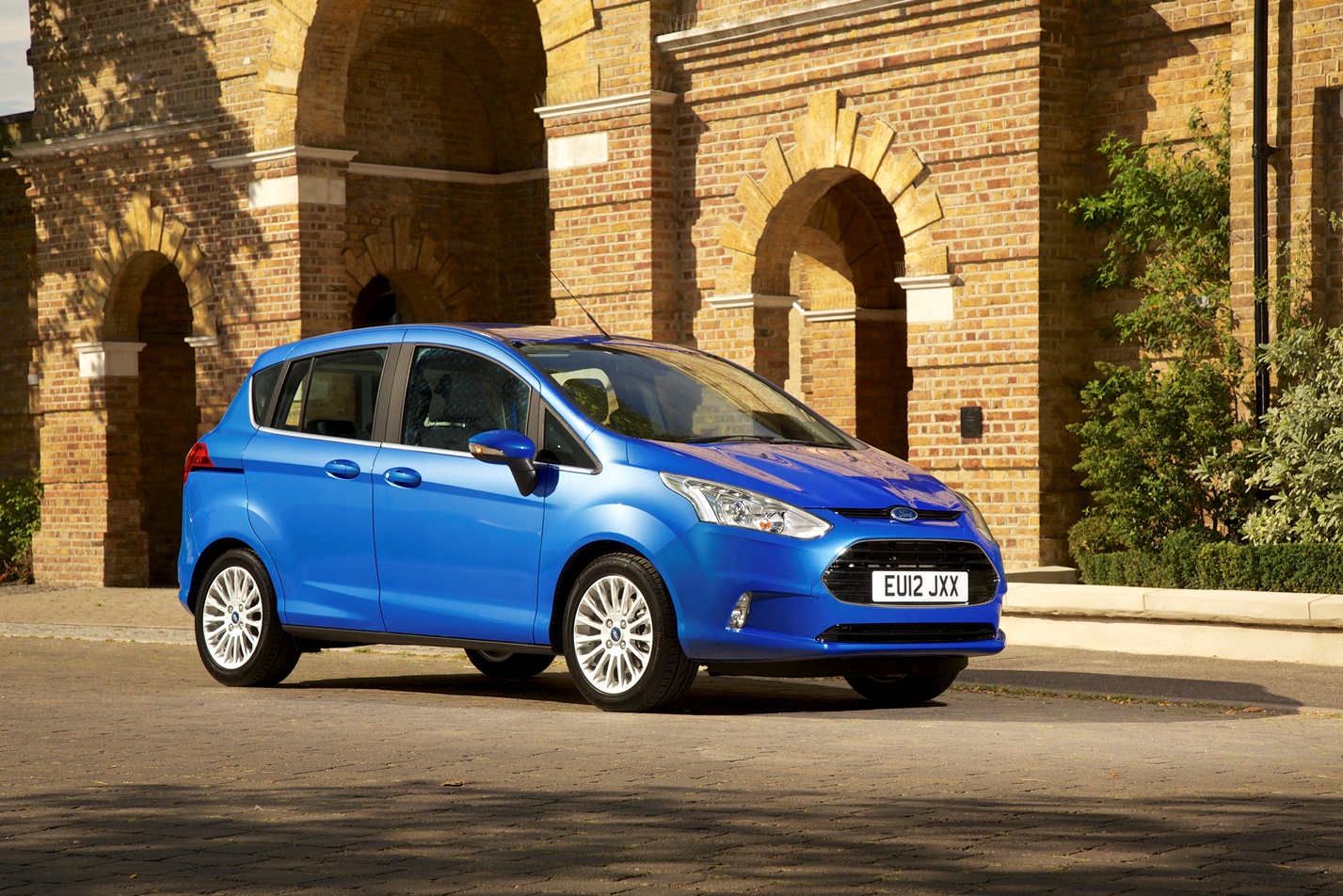
Road Test: Ford B-Max 1.0 EcoBoost Titanium


Price as tested: €23,170

+ Doors, comfort, engine, chassis, quality
– 1.0 not economical enough, needs more space in the back
= Better than the diesel version but still flawed

You know what, I may have given the B-Max a bit of a harsh time the first go-round. When I first drove Ford’s clever new compact people carrier, I was disappointed by its lacklustre new 1.5 diesel engine and equally disappointed by a ride quality that was just too firm and handling that felt too top heavy.

And while my criticisms of the diesel and the ride remain, having spent a bit more time with this, the 1.0-litre turbo petrol EcoBoost model, I have to say that the B-Max is coming rather more into focus for me.

Let’s start with that engine, which has been showered with praise and awards since it was launched last year. Virtually small enough to fit into carry-on luggage, the little three-cylinder EcoBoost engine is a paragon of smoothness, refinement and, surprisingly, grunt. A 100bhp power output is plenty enough in a car the size of the B-Max, and while 170Nm of torque isn’t much compared to the best diesels, it’s enough to make sure that the B never feels sluggish or caught in the wrong gear. And then there’s the character of it. Quiet and hushed at a motorway cruise, it revs happily and emits a distinctly Porsche-esque growl as you approach maximum rpm. It is quite brilliant.

Or at least it would be if not for a significant achilles heel. Fuel consumption. There’s no way of getting around it, over a mixture of motorway, town and main road mileage, I averaged just 8.2-litres per 100km. That’s 34mpg. That’s simply not good enough for a compact family car these days, especially one so explicitly looking to tempt diesel buyers back to petrol. I know, I know, long motorway hauls aren’t a petrol B-Max’s natural metier, but all cars these days have to be all things to all people and the sad fact is that I’ve gotten similar average consumption out of a 218bhp Mini Cooper S Works GP...

That aside, the B-Max really is a lovely little car to drive. Perhaps it’s the reduced weight of the petrol engine versus the diesel that last I tried, but the handling felt distinctly better. You still feel that the weight of the body is set a touch too high (those complicated latches for the sliding side doors the culprit perhaps?) but it’s still got that lovely, fluid feel we’ve come to associate with Ford’s right back to the 1993 Mondeo. The ride quality is still a touch too firm I’d say, and that gives ground to the much more supple Citroen C3 Picasso, but if you’re a keen driver, who needs a small, practical family car, then this is the one for you.

That said, if you really need a small, practical family car, I’m not 100% convinced by the B-Max’s credentials in the practicality department. Those sliding side doors are brilliant, and they make the loading and unloading of small people and their car seats very easy, especially in the close confines of a multi-storey car park. The fact that there’s no b-pillar doesn’t really have a massive effect in terms of loading and unloading, and in fact for some people it may make getting in and out a little more tricky (nothing to grab hold of bar the front seatback) but on the whole, it’s an entertaining gimmick and would certainly make a trip to IKEA that much easier.

But there’s not quite enough space in the back seats, specifically in the legroom department. I’m a hair over six feet tall, and I can fit in the back reasonably comfortably. But my two-and-a-bit year old son, who’s a hair over three feet tall, struggled a bit with space. Why? Because there’s a full six or seven inches between the back of the base that his car safety seat sits on and the actual base of the seat where he sits. That means he’s lifted up and forward by the shape of the seat, which means either he’s cramped for legroom, or I am because I have to pull my seat forward to give him space. It’s not a problem unique to the B-Max, but given the amount of thought Ford has clearly put into the doors, I was hoping for better.

The rest of the interior is just about perfect though, with a big, deep, square boot, comfy seats and a lovely-looking, high quality dash. My Titanium-spec press car also came with Ford’s new Sync system that connects wirelessly to your smartphone both as a phone and as a music player. As a phone it worked swiftly and flawlessly, but I found that the Bluetooth audio streaming tended to make tracks skip annoyingly, but they did play smoothly when connected by a USB cable. Still, the sound quality of the optional Sony stereo was little short of awesome. A highly recommended option.

At €23,170 for the test car, the B-Max makes an interesting alternative to a conventional hatchback, and its extra height and trick doors means that it’s potentially more practical than a similarly priced Focus. But that (otherwise) brilliant little 1.0-litre engine needs to give better economy in real world driving, and a touch more space in the back would make the B-Max nigh-on unbeatable.


Facts & Figures
Ford B-Max 1.0-litre EcoBoost Titanium
Price as tested: €23,170
Range price: €19,821 to €27,600
Capacity: 999cc


Power: 100bhp

Torque: 169Nm 

Top speed: 175kmh 

0-100kmh: 13.2sec

Economy: 4.9l-100km (60mpg)

CO2 emissions: 112g/km

VRT Band: A4. €200 road tax

Euro NCAP rating: 5-star; 92% adult, 84% child, 67% pedestrian, 71% safety assist – joint safest car in small MPV category.


News: Citroen C3 Picasso gets updated


One of our favourite cars, the Citroen CS Picasso (check out our recent long term test HERE) is getting an update and freshen up for 2013, but sad to say, there's a small note of disappointment in the news.

On the outside, the C3 Picasso is, frankly, looking better than ever, with a revised front bumper and the latest Citroën chevrons; together with the addition of LED daytime running lights for a fresh new look as standard on VTR+ models. Two striking new body colours are also introduced; Ink Blue and Pearlescent White.

Inside, little has changed overall but there is a new trim called Mistral ‘Mixou’ cloth, which is specified as standard on the VTR+ model. An electro-chrome rear view mirror is now included in C3 Picasso’s Automatic Pack option at no extra charge and there are new 16” ‘Blade’ alloy wheels as standard on the VTR+ version. 

As before, the the Special Edition C3 Picasso CODE comes with an array of additional equipment; including striking black or white ‘Clover’ 17" alloy wheels, panoramic sunroof, chrome door mirrors and roof bars; for a great value step-up cost of just €500. That's the model we had on our long term test and we'd unreservedly recommend it.

But there is a faint disappointment in the engine department. In the UK, the Picasso now comes with an updated 115bhp 1.6 diesel engine, while we just get the old 90bhp version – hardly the quickest thing around. Still, the 115bhp version would bump up both the price and the Co2 ratings, so perhaps we should be thankful for small mercies.

Prices start from €20,995 for the VTR+ model and €21,495 for the Code.


Road Test: Skoda Rapid 1.6 TDI Elegance


Price as tested: €24,265

+ Simplicity, quality, reliability, space, practicality, price, styling, comfort
– A few rough edges showing through to go with that price tag, indifferent handling
= As practical and sensible as they come but we'd save up the extra for the new Octavia

If I were to say that the new Skoda Rapid is both and at once a return to classic form for Skoda and something of an unfortunate step backwards, would that be too confusing? Possibly, so let me explain.

Pre-1998, Skoda was to most people a joke and not an especially funny one. Decades of decrepitude under communist rule meant that Skoda had been starved of development funding and any reason to produce competitive, interesting cars. That changed, dramatically, with the launch of the original Octavia, funded and developed by Skoda's new owner, Volkswagen. At once, the yoke of communism was thrown off, and Skoda marched happily forwards into a new capitalist reality. Successive models, from the Fabia to the second generation Octavia to the Superb to the utterly brilliant Yeti underpinned that reality with success, both critical and financial. And with sophistication. In fact, sit into a Yeti or a Superb today and you'd be hard-pressed to tell the difference between affordable Skoda and aspirational Audi. They are that good.

But there is now an increasing trend in the motor industry towards making cheaper cars, something that the car buying public is lapping up, as the success of Dacia shows. Make something simple and affordable, and you will capture the wallets, if not the hearts, of many. So it is with the Rapid. Skoda has taken a step back from its shiny, sophisticated recent past and looked further back, to the eighties and beyond, when it made simple, affordable, useful cars. (Never mind the inept comedians of the eighties who castigated Skoda – its cars even then were better by far than their reputation would have you believe.)

The Rapid is a family-sized hatchback that occupies an unusual middle ground between the likes of the Polo and Fiesta on one side and the Golf and Focus on the other. It's narrower by far than a Focus, but also much longer, the upside of which is a cabin that, while not very broad, has lots of leg and head-room for tall passengers in both front and rear, and a massive 550-litre boot that makes the trunks of even cars like a Mondeo or Passat look underfed.

So, it pushes all the practical buttons and it's not short of sophistication either. The engine in our test car was the cutting-edge VW Group 1.6 TDI diesel, and with 105bhp and 250Nm of torque, it's both swift and economical. Skoda claims 4.4-litres per 100km fuel consumption (64mpg) and if we didn't quite manage that, we easily broke the 50mpg barrier. 114g/km Co2 emissions is a touch high though, especially when you consider that a VW Golf with essentially the same engine gets closer to 100g/km, and that means your annual tax bill will be €200. It's here that you'll find the first chink in the Rapid's armour though. The engine (or possibly its installation) is fine, but nothing more. Acceleration feels noticeably slow-witted unless you push the oddly-weighted throttle pedal all the way to its stop, and refinement isn't terrific until you settle down at a chosen cruising speed.

Inside, Skoda has made great efforts to make the cabin look and feel as sophisticated as its bigger brothers, while still costing less. It's a neat trick, and Skoda almost pulls it off. The dials are clear and look like expensive watch faces. The steering wheel feels pleasant to hold and the driving position is both comfortable and well sited. But you'll notice that there's no switches in the front to control the rear windows, the grab handles in the roof clang back into position without a nice, soft motion and the plastics on the doors and dash-top, while still of good quality, don't have that nice touchy-softy-squishy feeling.

Because of all that, the Rapid feels a distinct degree less sophisticated than its Skoda cousins. Now, that's fine in the sense that it's also much cheaper. Prices start at just €16,515 (for the 1.2 MPI petrol; an engine best avoided if you want to (a) accelerate or (b) save fuel) and the pick of the range, the 1.2 TSI turbo petrol in Ambition spec, is just €19,550, with almost identical Co2 emissions to the diesel. All well and good, and those prices include standard electronic stability control – a significant benefit.

But it just doesn't feel as good to drive as it either should or could have. The rear suspension has been done on the cheap, relatively speaking, and uses simple torsion bars instead of the more modern multi-link setup as found on most Octavias. That means the boot is massive, but the Rapid does tend to clatter over bumps, and it never feels very well sorted at the front, either. Cornering is a somewhat lazy, imprecise process with vague steering and a sense of detachment. It's a good motorway cruiser, mind, with well suppressed engine noise and only a small amount of road and tyre noise.

I guess it depends what you want from a car. The Rapid is keenly priced, practical, spacious, ruggedly built, should prove reliable and hits its marks in terms of economy and emissions. It even looks quite nice. But I reckon Skoda buyers, by and large, have moved on recently and are enjoying the sheen of quiet luxury on recent models. So, perhaps it would be best to hold off buying, save up a little more, and get your hands on the impressive new Octavia that arrives in March. The Rapid's backward glance to a simpler, more practical time is appealing in many ways, but we all want to feel a little more sophisticated these days, don't we?


Facts & Figures
Skoda Octavia 1.6 TDI 105bhp Elegance
Price as tested: €24,265
Range price: €16,515 to €24,265
Capacity: 1,598cc


Power: 105bhp


Torque: 250Nm 


Top speed: 190kmh 


0-100kmh: 10.4sec


Economy: 4.4l-100km (64mpg) 


CO2 emissions: 114g/km
 VRT Band: A4. €200 road tax


Euro NCAP rating: 5-star; 94% adult, 80% child, 69% pedestrian, 71% safety assist


Road Test: Honda Civic 1.6 I-DTEC SE


Price as tested: €23,795

+ Terrific engine, quality, space, practicality
- Dynamically not as sharp as it should be
= Lovely engine but doubters will still need convincing


Just over a decade ago, Honda didn't make Diesel engines. In spite of the great advances that, even that long ago, had been made in making diesels smoother, gruntier and more refined, Honda regarded them as anathema. Too noisy, too smelly and just not us, old boy. We'll stick to high-revving, lightweight VTEC petrol screamers, thanks.

Given that, it was a pleasant surprise that the original 2.2-litre i-DTCi engine was, and remains, so good. And if it has taken this long to get a second, more compact, Honda diesel to the market then at least, as with John Mills' pint at the conclusion of Ice Cold In Alex, it was worth waiting for.

Honda's new 1.6-litre i-DTEC engine makes its debut in the Civic, a car which pushed Honda Ireland's sales up by a healthy 12% last year, against the background of a stagnant market. And given that the Civic's lonely 2.2-litre diesel, even with its Band A emissions, excluded Honda from the bulk of the c-segment market, its expectations for the new engine are commensurately high. It's expected not just to expand overall Civic sales, but to do so while simultaneously taking over most of the 2.2-litre's sales.

Just as well then that Honda's engineers haven't simply sleeved-down the old 2.2 to make a 1.6. The engine is new from the sump up and Honda claims that it's the lightest engine in its class. So sylph like is its weight that Honda has retuned the Civic's front suspension and steering to take advantage, with claims for improved feel and agility being made.

Honda makes great claims for its refinement, even fitting an active acoustic damping system in the cabin, and the result is indeed hushed; you only get a distinct diesel clatter when you venture beyond 2,500rpm. Better again is the performance. The 120bhp Honda gets from its 1.6 makes mincemeat of the similarly sized engines in the rival Ford Focus and VW Golf (95 or 115bhp and 105bhp respectively) and the i-DTEC engine makes a decent fist of convincing you that it's much larger in capacity,thanks to largely lag-free delivery and solid mid-range punch.

We doubt you'll ever match the claimed fuel consumption of 3.6-litres per 100km (78mpg) in real world driving, but on our brief test drive, we got 4.6l/100km (61mpg) so it's not what you'd call thirsty. 94g/km bests the standard Golf (albeit not the BlueMotion model) and Focus and means you can tax your Civic for €180 a year.

So, with the engine now bang-on the par for the class in terms of size, and potentially even class-leading in terms of its overall performance, can the Civic now meet the mighty Golf and Focus head-on?

Well, not quite but it's closer than it was before. The current Civic, when launched, seemed too detached in its driving style and too crude in its ride quality. Honda's decision to continue with a simple torsion bar rear suspension brings boons in weight, affordability and space efficiency, but it's simply not at the races when compared to Ford and VW's more complex multi-link rear ends.

So what happens is; you barrel happily into a corner in your shiny new Civic, enjoying the recalibrated steering which, while still a touch too light, feeds back a little better than before. You also notice, and enjoy, the fact that the lightweight engine means the front end is more eager to sniff out the apex. The Civic lacks the outright driver involvement of some rivals, but it's still a fun drive.

And then you hit a mid corner bump and feel the rear end bang, hop and skip. It's not as bad as the reaction you'd get from the VW Beetle (which we tested this week also and which has a similar rear suspension arrangement) but it still feels unacceptably crude compared to the best of the competition.

Which is a shame, as the rest of the Civic feels so sophisticated. I've heard some colleagues complain that the cabin feels 'too Japanese', and I can kind of see the point. The multi-level displays, a mix of analogue and digital, won't be to all tastes and yes, the surfaces and materials don't have that final Volkswagen-esque sheen of touchy-feely niceness. But the sense of sheer quality in the assembly is easily noticed. Honda has better chops when it comes to bolting together cars that last than most (even the vaunted Germans, and notwithstanding the 2.2 diesel's habit of having an expensive flywheel-related off-day) and you can feel that sense of quality in the cabin. It's very much a love/hate thing (as is the exterior styling) but for what it's worth, I like both. It's more distinctive by far than either a Toyota Auris or Mazda 3 and feels more special than a Focus or Golf. It's also more versatile, with a big cabin and those clever back seats that either fold flat horizontally or flip up vertically, like cinema seats. The payload options are almost infinite and it's the only mid-size hatch with which you'll feel truly smug in the IKEA car park...

Prices start from €23,975 for the SE model; a touch more than a Focus or Golf but it is better equipped, including climate control, stop-start and alloys as standard. If you buy into its quirkiness, or Honda's engineering-led image, then it's a more interesting alternative to the mainstream masses, and one with a deeply impressive new engine. John Mills was right, all those years ago...

Facts & Figures
Honda Civic 1.6 i-DTEC SE

Price as tested: €23,975
Range price: €21,895 to €30,395
Capacity: 1,598cc


Power: 120bhp


Torque: 300Nm


Top speed: 207kmh


0-100kmh: 10.5sec


Economy: 3.6l-100km (78mpg)


CO2 emissions: 94g/km

VRT Band: A2. €180 road tax


Euro NCAP rating: 5-star; 94% adult, 83% child, 69% pedestrian, 86% safety assist


News: Ford claims B-Max MPV is child-proof


Ford is claiming that its newly-launched B-Max MPV has a child-proof interior. They obviously haven't met my kids...

Every parent is familiar with the challenge of keeping a new car clean in the face of everyday use by children and pets. Ford has now tried to make that job easier for mums and dads by “child-proofing” the new B-MAX.

Engineers subjected the new B-MAX to laboratory tests that simulate the toughest treatment that children and pets can dish out, including soaking materials in milk and fizzy drinks; testing fabrics 0with a “mace”; and pounding plastics with a heavy rubber ball.

“By testing for everything from soft drink spills to muddy boots, we’ve made sure the B-MAX interior is ready for anything,” said Mark Montgomery, senior materials engineer, Ford of Europe. “I’ve got young children myself, so I’m very familiar with the mess they can create.”

Samples of all leathers and fabrics used in the Ford B-MAX’s interior were tested for stain resistance and ease of cleaning after being soaked for 24 hours in the liquids and being smeared with soil and grease.

Engineers also tested resistance to damage that can be caused by abrasive zips and fasteners found on children’s clothing and bags. The “mace test” used a metal ball with needle-sharp spikes to brush fabrics 600 times and replicate the effect of snagging zips and studs. Engineers also carried out a special test to repeatedly rub the seat material with Velcro.

Impact tests – conducted at temperatures as low as -30 degrees Centigrade when plastic is more brittle – used a rubber ball 10 times heavier than a regulation football to ensure that plastic parts could withstand bumps and knocks. Fabrics were also rubbed 60,000 times in a 17-hour non-stop wear test; metal spikes were scraped across plastic parts to test scratch resistance; and carpets were checked for durability on a special test rig fitted with rough abrasion wheels.

“These tests make sure we’ve done everything possible to make sure the car looks as good the thousandth time that families sit in it as it does the first time,” added Montgomery.

Road Test: Mazda 6 2.2 SkyActiv-D 150 Sport


Price as tested: €31,795

+ Handsome, frugal, fab to drive, solid
– Pretty much nothing
= As good a mid-size saloon as you'll find

An expensive Swiss watch has become a deep desire for so many of us. The thought of the expensive weight of all that carefully assembled stainless steel and titanium, our wrists tingling at the very thought of being topped by the logo of Omega, Rolex or Tag Heuer (delete according to taste), it's a status symbol we'd all love to have. But sadly, few of us will ever afford such a timepiece. Shame.

But what if I told you that you could have something just as good, possibly even better, for a lower cost, simply by trading in your timepiece's Swiss postcode for one from Japan? It's well known in high-end watch circles that, proud though the Swiss boys are of their products and movements, they collectively weep with jealously at the carefully crafted work of Seiko. The famed Japanese watch maker can produce wrist-wear of staggering reliability and accuracy, and no small amount of beauty, for a fraction of the cost of a Rolex.

There's something similar going on in the motoring world, too. Many of us desire a slick German sports saloon; we want our driveway to be adorned with the star of Mercedes, the four rings of Audi or the Munich colours of BMW, but their prices are just out of reach. So what if I told you that you could have a car as good to drive as a 3 Series, better looking than an A4 and more reliable than a C-Class, and all you have to do is pop into your Mazda dealer?

Most of the new 6's rivals come with 1.6 or 2.0-litre Diesel engines with outputs of around 115 to 120bhp, Band A emissions and a price tag circling the €26,000 mark. The Mazda, by contrast, has a price tag of €31,795 (for the diesel Sport model, which Mazda Ireland reckons will be its strongest seller), has a 2.2-litre engine with a muscular 150bhp and 380Nm of torque (an even more powerful 175bhp, 420Nm version is also available) and yet still hits that Band A emissions target, with 108g/km costing you just €180 a year to tax.

How has Mazda done this? Carefully, is the short answer. Its SkyActiv programme, which debuted on last year's very impressive CX-5 SUV, isn't one big whizz-bang fuel saving system but rather, like BMW's EfficientDynamics, a series of incremental improvements in every area. A little less friction here. A saving of a kilogram there. A touch less wind resistance somewhere else. It all adds up and the final sum of these parts is that low Co2 figure and a commensurately low fuel consumption of, claims Mazda, better than 65mpg on average. Part of that efficiency comes from a combination of i-Stop that kills the engine when you're waiting at the lights and a new system called i-ELOOP which uses a capacitor (like a battery; it reacts faster than a conventional battery but won't hold a charge for very long) that can power the electrical systems for up to a minute, independent of the engine, and recharges in just seconds from leftover braking energy. Clever stuff and the re-start time of the i-Stop is impressively fast.

Even so, I doubt you'll be able to match that fuel figure in real world driving, partially because almost no car ever does match its claimed figure, but partly because it's very hard to resist driving the new 6 in a somewhat brisk fashion. The last generation of 6 felt solid, planted and even a touch hefty to drive. This new one continues that tradition in part, but there's also a new-found litheness, a sense of fluidity and a truly engaging driving experience. The steering is the outright star here, feeling almost Jaguar-like in its combination of weight (except at parking speeds when it can occasionally get oddly heavy) and with great levels of feedback. It's a very confidence inspiring car, the 6, and even at very high continental motorway speeds, feels safe, secure and reactive. The ride quality, as long as you don't go for the optional 19" wheels, is also exceptionally supple.

Refined too. There's a rustle of wind noise around the mirrors at 120kmh and a touch of road and tyre noise on coarser surfaces, but the SkyActiv diesel 2.2 is impressively quiet and even manages to sound a little bit entertaining at higher rpm, with a gruff warbling noise rather than the usual bland diesel blare.

The cabin marks a particularly high point for the 6. It's very similar to the CX-5's to look at, but the quality of the materials has kicked up a notch and while it's a touch dark at times, it's also a terrifically comfy and pleasing space in which to spend time, helped in no small part by a well-located driving position and expensive-looking, clear instruments. There's good space in the back too although the boot is a touch smaller than much of the competition. Family buyers will be pleased to see that Mazda is emphasising the safety levels of the 6, with a host of new electronic aids including a city braking system that slams on the anchors if it senses you're going to run up the back of the car in front, a lane keeping warning and a blind spot monitor, as well as radar guided cruise control.

It's also a very good looking car, much more obviously so in the flesh (so to speak) than in photos, where the sweeping lines are more obvious and the muscular stance more noticeable.

That €31,000 price tag may hurt the 6's chances though. Its rivals all have significantly lower price points, even if they are for lesser engines with less equipment. Mazda is effectively competing with bottom-end versions of the BMW 3 Series and Audi A4 at that price too, and while it's a lovely car, that's a tough battle for any mainstream car maker, and Mazda has as yet no plans to try and match or beat the Koreans in the warranty war; three-year unlimited mileage is your lot.

But just as a Seiko will have true watch afficionados nodding in quiet respect, so I reckon this new Mazda 6 will have true car fans doing the same. Gorgeous, lithe to drive and solidly built, and with astonishing fuel efficiency, it's an early nod for one of the best cars of 2013.

Facts & Figures
Mazda 6 2.2 SkyActiv-D Sport 150

Price as tested: €31,795

Range price: €28,745 to €38,895

Capacity: 2,191cc

Power: 148bhp

Torque: 380Nm

Top speed: 211kmh

0-100kmh: 9.1sec

Economy: 4.2l-100km (67mpg)

CO2 emissions: 108g/km
VRT Band: A3. €190 road tax

Euro NCAP rating: Not yet tested


News: Renault's Captur wants to box the Juke


They may be part of the same group, and even share a chassis, but the new Renault Captur is most definitely muscling in on the Nissan Juke's compact SUV territory.

Teased earlier this week and now revealed here in full, the Captur takes both chassis and styling cues from the just-launched new Clio but bulks everything up into a much more muscular shape. Is it just us or are there hints of the old Avantime in the overall shape and stance? Maybe just us. Whatever, it's a handsome beast and that is just as true on the inside, where again Clio elements have been taken, put on a bit of muscle and are looking pretty darned good.

Renault is claiming best in class fuel economy and the two key engines will be the TCe three-cylinder petrol turbo and the long serving 1.5 dCi diesel, an engine which should see the Captur's emissions fall as low as 96g/km.

The Clio has already been much praised for its dynamic performance, so we can hope that the Captur will prove as invigorating to drive. Will the fact that it's shorter (slightly) the the Juke compromise interior space too much though? We'll find out when the Captur makes its public debut at the Geneva motor show.

Between this the and Peugeot 2008, it's looking like a good year for compact French SUVs...